
 AD광고
AD광고New사랑과 우정으로 빛나는 모험프린세스 캐치 티니핑
 AD광고
AD광고Best Seller소년 김구의 가슴 뜨거운 역사설민석의 한국사 대모험 38
- 소득공제
- 무료배송
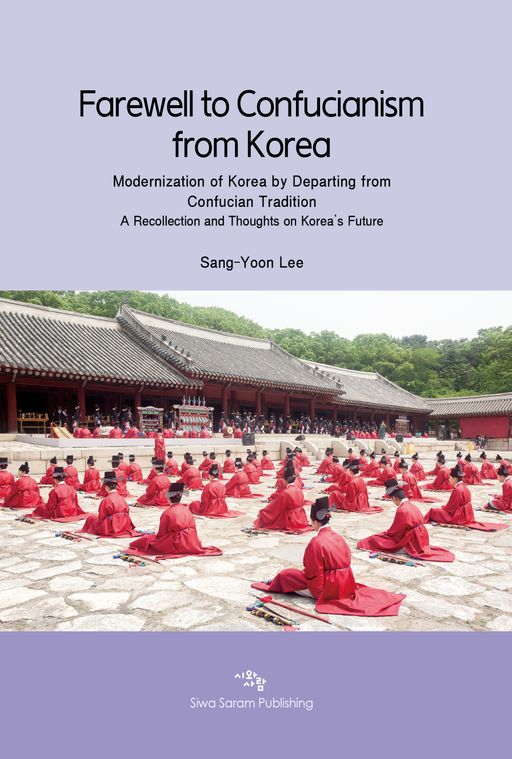
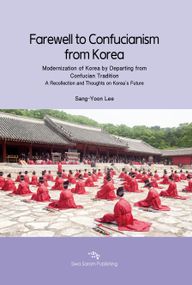
Farewell to Confucianism from Korea
- 이상윤(Sang-Yoon Lee) 저
- 시와사람
- 2025년 09월 25일
10%22,500원25,000
적립금
1,250원 (5% 적립)
추가 적립
추가 적립 안내
5만원 이상 결제 시 (*배송비 제외)
정가제FREE(상품/사은품) 금액이 2,000원 이상이면 2,000원 추가적립
10만원 이상 결제 시 (*배송비 제외)
정가제FREE(상품/사은품) 금액이 2,000원 이상이면 2,000원 추가적립
정가제FREE(상품/사은품) 금액이 5,000원 이상이면 5,000원 추가적립
결제혜택
무이자 할부
신용카드 무이자할부 안내
결제사 혜택
결제사 혜택 안내



쿠폰
등록 페이지로 이동
배송비
무료 (해외배송의 경우 지역에 따라 상이)
배송안내
서울특별시 강남구 강남대로 542(논현동, 영풍빌딩)
- 배송지역 선택
- 주소 검색
지금 택배 주문하면 9/16(수) 출고 가능
택배보다 빠른, 나우드림
22,500원
NAVER 네이버 ID로 간편구매 네이버페이
| 네이버페이 구매하기 | 찜하기 |
[네이버페이]
상품 규격 정보
| ISBN | ISBN-13 : 9788956657875 |
|---|---|
| 쪽수 | 144쪽 |
| 크기 | 기타 규격 |
| 제품구성 | 단행본 |
이 책이 속한 분야
- 인문/역사 > 한국역사/지리
관련 이벤트


책 소개
Preface and Acknowledgements
I am not a historian or a scholar of the humanities. I am a medical doctor, born and educated in Seoul in the late twentieth century, and now living within a rich global network of mentors and friends while pursuing medical research in the twenty-first. This book is written in gratitude to those who broadened my perspective beyond Korea-centric pride in our own history and culture. I enjoyed writing with a certain independence from academic convention. To professional historians, the views expressed here may appear unorthodox or out of step with standard textbooks of Korean history. A word of caution: students preparing for university entrance examinations or corporate recruitment tests in Korea may do well not to take this author’s side.
Throughout, I have aimed at an approach that draws Korea’s history into the larger current of world events, rather than treating it in isolation. Some of the theories advanced here, for example, the claim of a Spanish origin behind the Japanese invasion of Korea in 1592, may strike readers as bold, perhaps even reckless. I may not have escaped the bias of my sources, but I have tried to balance them and present a fair account. My research was neither systematic nor exhaustive, relying heavily on personal memoirs and biographies. Yet I have neither invented nor falsified anything to support preconceived hypotheses. What I offer is an empirical perspective shaped by a physician’s training: Korea, and in particular the Joseon Kingdom of the nineteenth century, appears as a gravely ill patient suffering from an inherited disease. The illness was Confucianism.
This book might be read as a kind of clinical record, or even an autopsy report of the Joseon Kingdom in its decline. Like many patients, the kingdom’s fatal conditions were largely self-inflicted. Again and again, its leaders made the wrong choices, disregarded advice, and aggravated their own deterioration. Confucianism was both the ideology and distortion, shaping society in ways both constructive and destructive.
I will not attempt to summarize Confucianism here; the literature on the subject is already vast. For the reader’s orientation, however, it can be said briefly that Confucianism was an ancient system of autocracy and ambiguity in East Asia. Though Confucius lived in the fifth century BCE, contemporary with Socrates, he himself looked back nostalgically five centuries further to a world resembling Egypt under the Pharaohs. Korean Confucianists from the tenth century onward fabricated reasons why their society should adhere to the purest form of Confucianism, even as China itself drifted. In Korea, loyalty to Confucian hierarchy hardened into rigidity, stifling creativity and productivity.
Two of its most disastrous effects were the suppression of Hangul in official documents until the end of the dynasty, and the persecution of Catholics in the nineteenth century. The dynasty’s collapse displayed, like a full-color atlas of pathology, Confucianism’s malignancy. Tragically, the system was not dismantled by Korea’s own democratic revolution, but by Japanese conquest.
Viewing Confucianism as a disease also helps to explain the ascent of modern Japan. Since the American fleet under Commodore Perry landed in Yokohama in 1853, Japan faced repeated choices between tradition and modernization. In the end, it was a modified Confucianism that underpinned Imperial Japan and alienated it from other democratic powers, with ordinary Japanese themselves becoming victims of its distortions, even as their government pursued aggressive expansionist policies on neighboring peoples. For Koreans under Japanese rule from 1905 to 1945, the continuity of authoritarianism rooted in Confucianism was obvious. It is no surprise that after liberation, no one wanted to restore Korea’s dynastic heritage.
The twentieth century was Korea’s greatest era. Industrialization and democratization advanced together. People became healthier, taller, and freer. Korea is now among the safest in the world, even while formally still at war. Every positive change followed de-Confucianization: abolition of hereditary privilege, establishment of gender equality, and religious freedom. Modern education accelerated mechanization and living standards. Korea achieved all this without civil war, religious conflict, generational strife, or separatist rebellion. The Korean War, historians agree, was an externally imposed event, planned and directed from Moscow.
Why then raise Confucianism again? Because these achievements apply only to the South. North Korea remains a Confucian dynasty in disguise, disturbingly similar to Joseon. When reunification comes, South Koreans will face urgent questions: how to uproot the Confucian mindset in the North, and how to rehabilitate what is sound.
Recent Korean politics, especially the turmoil surrounding Yoon Seok-yeol’s troubled presidency, have stirred sharp debate both at home and abroad. What may appear to be a sudden crisis is better seen as part of a longer pattern, where old traditions and ideas still have enormous bearing on public life. This book examines those deeper roots, showing how Confucian customs have shaped Korea’s politics and held back change. Still, there have been important steps forward: in 1948, Korea wisely granted voting rights to all men and women.
This work is not a professional academic project supported by a research team. Comprehensive citation of books and databases lay beyond my reach. I relied heavily on travel, visiting sites in Korea and Japan, and on public resources such as Wikipedia. Its multilingual articles, in English, Japanese, Korean, Chinese, French, and Russian, proved especially valuable for their differences in nuance, which often revealed more than the similarities. I drew carefully on Japanese publications, aware of distortions, as I did with Korean ones. Nationalism must not corrupt history.
Digital access to Korea’s historical archives has been indispensable. What was once available only in classical Chinese hardcopy is now searchable, bilingual, and even multilingual:
•National Institute of Korean History: https://www.history.go.kr/
•Korea Heritage Service: https://www.heritage.go.kr/
•National Museum of Korea: https://www.museum.go.kr/
I owe an immeasurable debt to mentors and colleagues. The presence of Professor Emanuel Pastreich, former long-term resident of Seoul now living in Tokyo, encouraged me: if an American can master classical Korean texts, why should a Korean not attempt to write modern history in English? Steven Brunton, whose broad cultural view and guidance in revision helped me give clearer form to the manuscript. Dr. Susan Pitman-Lowenthal has been a constant partner in dialogue across Seoul, Tokyo, Hong Kong, Zurich, New York, and Boston, helping me shape the very purpose of this project.
I am grateful as well to friends in Japan, Canada, the United Kingdom, France, Germany, Austria, Poland, and Russia, for their continuous inspiration and encouragement. I hold especially dear my memory of the late Professor Akaza Hideyuki of the University of Tokyo, who treated me like both a student and son. Wisdom ignores borders.
For physicians, research aims at understanding disease within the individual patient. Cure is often impossible, but early recognition and intervention can save lives. If readers agree that Korean history is not unique, but part of the larger human chronicle, and that its lessons can apply elsewhere, then this work has achieved its purpose. The old disease may resurface; we must remain vigilant.
Sang-Yoon Lee
Seoul, 2024-2025
목차
[목 차]
Preface and Acknowledgements • 7
Chapter 1
Joseon: An Unprecedented Confucian State • 17
Joseon, or Korea: Naming the Korean Nation • 18
The Question of the Korean Language: An Introduction for Foreigners • 22
Joseon: Korea’s Shameful Heritage • 28
Korea: The Most Thoroughly Confucian Country • 31
Western Views of Joseon: The Yangban Elite • 32
Who Were the Yangban? A Thousand Years of Evolution • 37
Did the Korean Empire Die Naturally or Was It Murdered? • 39
Chapter 2
Three Attempts to Enlighten Korea from Within • 47
First Attempt: Hangul as a Confucian Tool of King Sejong • 48
Failure of Reform: The Deliberate Maintenance of a Literacy Divide • 54
Literacy Divide Within the Ruling Class: A Hypothesis • 55
Second Attempt: Yangban Converts to Christianity • 56
Yangban Efforts to Teach Christianity in Hangul • 58
Failure: Thought Police and the Limits of Reform • 59
Translating the Bible into Korean • 61
Source of Literacy Divide: A Theory Under Field Testing • 62
Third and Last Attempt: Publishing Popular Opinion in Hangul • 64
Why Confucian Reform Proved So Difficult in Korea • 68
Chapter 3
Japanese Influences and Korea’s Entanglement with Japan • 71
From Rising Sun to Rogue State • 72
Rationale for Binding Korea and Japan after 1868 • 74
Japan’s Troubled Encounter with Christianity • 77
Korea and Japan: Comparing Tokugawa Bakufu and Joseon • 81
Japan’s Nineteenth-Century Educational Revolution • 85
Japanese Obsession with Imperial Universities • 92
Japan’s Constitutional Struggles in the Modern Era • 94
The Politics of Subtraction • 95
Ito Hirobumi and Emperor Meiji: Architects of Modern Japan • 98
Ito’s Second European Journey to Study Constitutions • 101
Prime Minister Ito: Unelected Authority • 103
Emperor Meiji and the Constitution • 105
Lessons from Italy and Germany: Reform by Compromise • 106
The Emperor’s Infallibility • 110
The Constitution of the Empire of Japan of 1889 • 112
Emperor Meiji’s Responsibility in History • 119
The 1890 Rescript on Education • 123
State Shinto: A Fusion of Doctrines • 127
Zhou Was an Ancient State, But Its Life Was New 周雖舊邦 其命維新 • 128
Fukuzawa Yukichi: From Confucianism to Liberalism to Imperialism • 132
Nationalizing Western Civilization: Japan’s Quantum Leap • 138
Fukuzawa’s Negative Legacy • 139
Pan-Asianism: An Idea Before Its Time • 140
Japanese Racism as a Counter-Reaction • 143
Education and the State Examination System • 149
Japan’s Rise and Fall Through the Lens of Confucian Ideology • 155
Confucianism for Industry: a Japanese Invention and its Korean Legacy • 156
Chapter 4
The Empire of Korea, 1897-1910 • 161
Reflection from 1899: Queen Min’s Assassination and Seo Jae-pil’s Second Exile • 162
Daewongun’s Thirty-Five Years of Power • 166
Father and Son: A Shift in Royal Authority • 172
The 1899 Rescript on the Promotion of Study • 173
The Constitution of the Empire of Korea of 1899 • 178
Horace Newton Allen’s Archives on the Empire of Korea • 181
The United States: Last Resort of Korean Independence • 187
Liberal Democrats and the Pro-Japanese Petition for Annexation • 189
Choe Ik-hyeon: The Last Icon of Confucianism • 191
The Revival and Limits of Confucianism in Korea • 193
Education in Korea Before 1910 • 19
Tragedy of False Hope: Waiting for a Savior from Heaven • 199
Chapter 5
The Era of Japanese Rule, 1910-1945 • 203
The Deal Between Two Emperors, 1910 • 205
The Last Years of The Empire of Korea • 207
The 1919 Proclamation of Korean Independence • 215
The Provisional Government of the Republic of Korea • 222
The Korean Independence Army and the Provisional Government • 225
Japan’s Responses to Koreans • 231
Japan’s Bridge for Korean Higher Education • 235
State Shinto in Colonial Korea • 238
The Oath of Imperial Subjects in Korea • 240
Memories of Imperial Japan: Korean Perspectives • 241
Japan in the Korean Recollection of 1910 to 1945 • 243
The 1945 Rescript Ending the Greater East Asian War • 244
Chapter 6
Two Koreas After 1945 • 251
The 1948 Constitution of The Republic of Korea • 252
Syngman Rhee: Brilliance and Shadow • 255
Rhee’s Adopted Son • 261
The April Revolution of 1960 • 263
Rhee’s Second Adopted Son • 264
Democracy Confronts Confucianism • 265
The Rise of Christianity in South Korea • 265
Korea as a “New Israel”: A Far-Right Christian View • 270
Hyeonchungsa and the Korea-Japan Talks • 271
The 1968 Charter of National Education • 275
The October Restoration of 1972 • 277
Memories of President Park Chung Hee • 281
Park Chung Hee: Korea’s Napoleon • 282
The Death of President Park • 285
The Miracle on the Han River: Park’s Positive Legacy • 286
South Korea in the 1970s vs. Japan in the 1930s • 291
The Republic of Korea After 1979: Present and Future • 293
Freedom of Thought and the Lessons of History • 295
North Korea Before 1945: Christianity and Industry • 296
Industrialization in the Two Koreas After 1945 • 298
The 2019 Socialist Constitution of the DPRK • 300
Guiding the Future from the Lessons of the Past • 305
Author’s Apologies • 306
[본 문]
Chapter 1
Joseon: An Unprecedented Confucian State
Many sovereign states and dynasties have existed throughout Korean history. To understand the current features of Korea (divided into two states with extremely different characteristics and virtually no communication between them), we have to start from the nearest predecessor state: Joseon. Contrary to the teachings of conventional nationalist histories, the Empire of Korea (1897-1910) and the era of Japanese rule (1910-1945) can be combined as the extension of the Joseon dynasty. There is one compelling reason to support this unconventional grouping: whether Koreans were allowed to back a democratic republic would be the proper demarcation in their history. When the Empire of Japan fell in the Second World War, Confucian rule finally ended.
Joseon, or Korea: Naming the Korean Nation
The Joseon Kingdom, built in 1392 after a coup d’état of the combined forces of the army, Confucian scholars, and officials overthrew the Goryeo dynasty(918-1392), was a precedent sovereign state of the unified Korean nation until 1897. The name Joseon is still widely used in Japan and China regarding international politics or even in weather forecasts. In 1882, when the Joseon Kingdom first entered into a diplomatic relationship with the United States, it was asserted by Koreans not to be called that, because Korea was actually derived from Goryeo. This reasonable request from the Confucian orthodox viewpoint was not honored by America, and all other Western states continued to use Korea, or Corea (in the case of France, Italy, and Spain) as they had been familiar with that name since the Middle Ages through Arabic and Chinese literature.
Citizens of the Republic of Korea (South Korea) generally do not like to be referred to by the old name, Joseon, because it stirs up unpleasant memories that would be better forgotten. There is a widespread sense of shame about Joseon dynastic history. However, the mood is quite different in the Democratic People’s Republic of Korea (North Korea). Its official name in Korean is 조선민주주의인민공화국 (pronounced Joseon Minjujui Inmin Gonghwaguk). In English and other European languages, the appellation “Korea” was frequently, if not exclusively, used both in history and geography. Actually, “Joseon” is rarely used in English literature because it had staunchly prohibited any formal contact with Westerners until 1880. So, allow me to clarify: When Joseon is used in this writing it means a specific state that existed from 1392 until 1897 in the Korean peninsula. The Joseon Kingdom became the Empire of Korea in the latter year, under the same monarch and dynasty, and it was abolished by the Empire of Japan’s annexation in 1910. Accordingly, the Joseon dynasty usually refers to the household of hereditary monarchs of the combined Joseon Kingdom and the Empire of Korea.
This confusion was deliberately maintained because no member of the Korean imperial family was assassinated by or abdicated to the conquering Japanese forces of 1910. Then, the Korean emperor was slightly demoted to the level of king within the Empire of Japan and sovereign governmental power was ceded to the Japanese emperor akin to a private real estate deal. Though the dynasty persisted through heredity, from royal marriage ceremonies to siring offspring, a king without power was nothing more than a hostage. The Japanese colonial authorities tried in vain to present the annexation as peaceful and voluntary, claiming that members of the former Korean imperial family lived as elegantly as their Japanese counterparts. Few Koreans accepted this narrative, because the annexation represented far more than the mere removal of the Korean emperor from the throne.
For thirty-five years, roughly a full generation, the twenty million-strong Korean nation was compelled to become Japanese. The brutal system of Japanization was applied across the board: diplomatically, militarily, legally, economically, linguistically, and religiously. The forceful homogenization of a people with a tradition of independence stretching back millennia was unprecedented in history and destined to fail. Some parallel examples in Europe are Greece and Poland. Japan was not prepared to govern Korea. They did not have solid objectives and coherent plans for governance. During this period, Korea was renamed “Chosen” by Japan, which reflected the Japanese pronunciation of the corresponding Chinese characters. The nuance was intentionally derogatory. This chapter in history helped to fuel Koreans’ general distaste of the word “Joseon.”
As the reader may sense, the Republic of Korea (大韓民國, Daehan Minguk) is the successor state of the Empire of Korea (大韓帝國, Daehan Jeguk). Conveniently, Hanguk (韓國) means either one, depending on the context. Not only was the name of the state inherited, so too was the national flag, first presented in diplomatic relations with the United States. Since the establishment of the 1948 Constitution of the Republic of Korea, the South Korean government has claimed that it is the only legitimate government in the entire Korean peninsula that had ever been known as the Empire of Korea. Now, Japan refers to South Korea as Kankoku (韓國) and North Korea as Kita Chosen (北朝鮮) because the Japanese government acknowledges only the Republic of Korea as the legitimate sovereign state in the Korean peninsula.
In the historical sense, all three words, Han, Joseon, and Korea are qualified to designate land and people living in the Korean peninsula. Actually, the best-known name, Korea, is the youngest. The former words are at least two thousand years old (philological dissertation will be omitted), and the latter has existed for around sixteen hundred years. In the vernacular, the exact name of the Korean nation and its people has been lost to history. All three names were written in Chinese history books, by Chinese imperial historians, using Chinese characters. A deep and proper study of East Asian history and culture necessitates a strong understanding of Chinese characters.
The Question of the Korean Language: An Introduction for Foreigners
Western visitors to Korea in the nineteenth century were most confused when they found that the Chinese spoken language was virtually unintelligible to Koreans. French Roman Catholic priests, who had diligently studied Chinese for years, were frustrated that they had to study Korean vernacular from the start. However, the yangban (Korean nobility), were able to read and write Chinese quite well. Chinese literacy was the emblem of high social status in Joseon. So, it was recommended from such sensitive initial contact that all European missionaries bound for Korea and Korean student candidates for the priesthood should be taught three languages in order to fulfill their assignments: Latin for regular theology courses, literary Chinese for written communication with well-educated Koreans, and Korean vernacular for verbal communication with commoners who were unable to read Chinese characters. French missionaries and Christian yangban both taught languages using the Chinese literary language as the medium.
Though I am quite familiar with numerous Chinese characters, I cannot articulate them using proper Chinese pronunciation. Korean pronunciation of Chinese characters is often so different that I cannot understand even a single word in a Chinese film. Dialectic varieties in China further complicate the matter. It seems that few Koreans, except for merchants in bygone eras, were attentive to this incapability because the primary purpose of studying Chinese was to read books and write diplomatic documents precisely.
The reader will notice that Koreans had lived a dual life in terms of language until the twentieth century. The history of authentic Korean vernacular literature started only in the fifteenth century, while the annals of Chinese literature by Korean authors is traceable to the second century. I will argue that the literacy divide, i.e., literary in Chinese for the nobility and Chinese-illiteracy for common people, was the greatest unique feature of Korea for more than ten centuries. Language divisions have been observed across the world when conquerors have ruled over native peoples; the best example in English history was described by Walter Scott in Ivanhoe. In the twelfth century, the Anglo-Saxons spoke English while in the same country, the Normans spoke French. Language, both written and spoken, was the very manifestation of suppression and inequality. Literacy divide in Korea was more perplexing because the ruling class, ethnic Koreans, spoke the same language in daily communication. My own family history will provide the evidence (in later publication). Hangul (the Korean alphabet) was invented in the fifteenth century for the very purpose of solving this problem, but it was undervalued, and its use in the political arena was oppressed by the educated class until 1895. Yangban argued that perfect translation of Chinese texts to Korean was impossible. Yes, it was. And it still is. But it does not mean that what was created in Chinese was always superior to what was documented in Korean. This fallacy was too difficult for Koreans to overcome. We will delve into this topic later and compare it to Japan’s solutions since the eleventh century. Koreans and Japanese had suffered from the same problem of dependence on Chinese letters for daily communication and higher learning and their different remedies made ever-growing differences over the course of history.
From my experience in studying foreign languages, Japanese is not only the nearest to Korean, but also the easiest for native Koreans to learn. This view is generally accepted by linguists. The grammar and some basic words are very similar. However, Japanese phonetics are simpler than those in Korean, as there are fewer consonants and vowels. So many homonyms (different meanings for the same sound) are seen that the use of Chinese characters for clarifying the exact meaning is essential in Japanese. Native Korean speakers will notice that Japanese books are written half in Chinese and half in Japanese (Kana) and the syntactic structure is plainly understood without much difficulty. Unless a reader knows roughly three thousand Chinese characters, Japanese literature, including manga, is inaccessible. Familiarity with Kana phonetic symbols is necessary, but insufficient. Proper pronunciation of Chinese characters is a conundrum in studying the Japanese language. The approach is sometimes phonetic, and sometimes semantic. Similar arguments about the role of Chinese characters in the Korean language are valid. If you were familiar with Chinese characters, then it was greatly helpful in understanding Korean literature, though it was no mean feat. Chinese characters are always pronounced phonetically in Korea.
Figure 1-1. A typical Japanese history textbook. Note that small Kana characters are superscripted for the correct pronunciation over several Chinese characters. 新 山川 日本史 History of Japan. 2017.
Figure 1-2. A typical page in a Korean genealogy book. No Hangul superscript. 全義李氏姓譜. 1992.
South Koreans are still in the process of removing Chinese characters from written communication. Newspapers began to phase them out only in the late 1980s, and today their use in newspapers, magazines, or online content is rare. When they do appear, it is almost exclusively in parentheses to clarify the homonymous names of people or places. Korean government documents once resembled Japanese documents in this respect, but now Chinese characters are rarely seen in official documents or university textbooks. But as we will see in Chapter 2, the complete removal of Chinese characters may not be attainable within a few generations. Actually, I have noticed that Chinese characters have found a permanent place in the Korean government’s digitized archives in systems such as the Family Relations Register. Also, most Confucian-based private organizations are now changing their language policies. They must do so because fewer people can read the original genealogy books without assistance. However, it is also unlikely that Chinese characters will be completely removed in the private sector, simply because there are so many books and relics still in existence. If we are determined to completely remove Chinese characters as North Koreans and Vietnamese have done, then much old literature that has been kept for posterity will be lost.
Diminishing use of Chinese characters in South Korean jurisprudence textbooks.
Figure 2-1. Nouns written in Chinese characters. 法學通論 Outlook of Jurisprudence. 1993.
Figure 2-2. Section titles written in Chinese characters. 民法講義 Lectures on Civil Law. 2002.
Figure 2-3. No Chinese characters. 상법 강의 Law and Business. 2015.
In my view, the most striking feature in Korean history is the persistence of the language itself. Koreans largely still speak the same historical language, much different from Chinese and Japanese, though sharing many Chinese-derived words. Korean has remained relatively static since it was first documented using Chinese characters some twelve hundred years ago. Even the period of Japanese rule (1910-1945) did not render the slightest footprint on the Korean language. New Japanese words that were used relating to civil society, economy, industry, and manufacturing were almost completely Koreanized based upon the matching Chinese characters or the original European etymology. Japanese words like sushi and ramen were incorporated into Korean because they became popular dishes for Koreans.
For over a century since the opening of the Joseon Kingdom, the English language has been widely taught in Korea from middle school onward. Most Koreans are unconcerned about the overwhelming influence of English, because the differences between the two languages are so great and fundamental that there is zero chance that the Korean would be replaced by English. As a multilingual reader of books and scientific journals, I can declare that perfect translation between English and Korean is totally impossible. Attempting the same between Japanese and Korean is more achievable if the topic falls under the umbrella of science and technology.
Then, why am I writing this book in English? It is because I want to speak to a broader audience, not only in Korea, but the rest of the world. When I communicate with Japanese friends or business partners from China, whether verbally or in writing, I use English. The same holds true for my associates from Brazil or Austria. I believe that I can explain the unique features of Korea in the framework of general human history. In this sense, the English language is the most convenient tool to access the vast literature.
All of these stories might appear interesting, but complicated, because the reader is required to start from many thousand years ago when reliable history was mixed with mythology. I shall put them aside for later. In this chapter, I will focus on more recent history.
Joseon: Korea’s Shameful Heritage
This deliberately provocative subtitle may seem acceptable to Western readers, though conservative Koreans my find it offensive. A nation can often be judged by how it faced its final moments. For example, many historians regard the Byzantine Empire’s fall in 1453 as honorable: it’s last ruler, Emperor Constantine XI Palaiologos, fought alongside the citizens and soldiers of Constantinople until everyone, including himself, was killed by the Ottoman forces. Another example is the Second Polish Republic, conquered simultaneously in 1939 by Germany from the west and the Soviet Union from the east. These heroic deaths of Polish soldiers and politicians became symbols of patriotism remembered not only by contemporaries but also by observers abroad.
Most Koreans regard the invention in 1446 of Hangul, an advanced, yet simple phonetic alphabet system by King Sejong (世宗, 1397-1450; reigned 1418-1450) as the Joseon dynasty’s greatest achievement. A very important but embarrassing question was why the ruling yangban class so fiercely resisted the creation of Hangul and its use in governmental administration. The use of Hangul was limited to women and uneducated people until the last decades of the Joseon dynasty. This literacy divide was the very intention of the Confucian ruling class. If there was any major rift in the histories of Korea and Japan, this literacy gap was the single most important contributing factor to the obscurity and stagnation of the Korean people compared to the Japanese, from the sixteenth century onward. The oppression of Hangul was rightfully justified in the doctrines of Confucianism, as will be discussed in Chapters 2 and 4. Vice versa, the broad use of Kana, the Japanese alphabet system, since the eleventh century, despite technical limitations in representing diversity in vocal sounds, was proof that Japan was never an authentic Confucian society that captivated everyone’s body and soul.
The rule of the Joseon dynasty was officially terminated on August 29, 1910, by the annexation treaty between the empires of Korea and Japan, a seemingly legitimate agreement between two equal partners. Regretfully, there was no official war between Korea and Japan, yet unofficial grassroots resistance had existed since 1905, leaving Korean casualties in its wake estimated to be in the hundreds of thousands. The Korea Independence Army was never ordered or motivated by the emperors. It is disturbing that the Korean emperors never spoke to the people to raise arms against the invaders, while Emperor Gojong (高宗, posthumous temple name, 1852-1919; King of Joseon, 1864-1897; Emperor of Korea 1897-1907) sent endless secret notes and money to their confidants. The feeble-minded successor, Emperor Sunjong (純宗, posthumous temple name, 1874-1926; Emperor of Korea 1907-1910), kept silent about the 1919 March First Movement when thousands of unarmed civilians were killed in peaceful marches for independence. These two emperors of Korea, the abdicated father and the degraded son, were among the most cowardly leaders in world history, not to mention the most corrupt and ignoble. The latter one died in 1926 as a childless opioid addict, and nobody mourned his death. In Chapter 4, the reader will learn more about the last moments of the Joseon dynasty and why they were remembered so shamefully. Emperors of Korea behaved exactly per the value system of Confucianism as they were taught by tradition, which looked embarrassing to the eyes of few enlightened Koreans and their foreign friends.
Joseon, an ideology-driven state, survived two major international wars, the Japanese Invasions of Korea from 1592-1598 (a.k.a. 壬辰倭亂 in Korea, 文祿-慶長の役 in Japan, and 萬曆朝鮮之役 in China), and the Qing Invasion of Joseon of 1636-1637 (a.k.a. 丙子胡亂 in Korea, and 丙子戰爭 in China). There were countless minor wars, revolts, and mutinies in Joseon, and it should be remembered by world historians as one of the greatest wonders of the human race. It survived for five centuries, and it did not change significantly until its final two decades. It is worthwhile exploring the ideological background of this strong resistance to change in Joseon. Korean people continuously strived to renovate the state on many occasions, but Joseon was ultimately successful in completely preserving old orders. In this book, some, though not all of these heroic attempts at awakening will be discussed. It seems that the Joseon dynasty is the most interesting example of a state that attempted to stop the clock and petrify its civilization. This was not state failure but, in a sense, its greatest success: the founders of Joseon had deliberately designed it to halt time. We collectively call that design Confucianism, and Joseon is remembered as the most Confucian state, while, perhaps ironically, the Chinese empires had failed.
Korea: The Most Thoroughly Confucian Country
What learned people of the English-speaking world saw from Korea can be sampled in the Encyclopedia Britannica (chapter on Confucius and Confucianism, 15th edition, 2003). This is the starting point of the discussion here.
Among all the dynasties, Chinese and foreign, Korea’s long-lived Yi (Joseon) dynasty (1392-1910) was undoubtedly the most thoroughly Confucian. From the fifteenth century onward, when the aristocracy (yangban) defined itself as the bearer of Confucian values, the penetration of court politics and elite culture by Confucianism was unprecedented. Even today, its vitality remains visible through political behavior, legal practice, ancestral veneration, genealogy, village schools, and student activism.
The author of that Britannica article was correct in describing the minds of Joseon’s yangban class and the broad features of contemporary South Korea. Yet one might argue that North Korea should also have been mentioned. Let us attempt to supplement those omissions.
The Joseon Kingdom sought to renovate itself under internal and external pressures, persisting into the early twentieth century, starting by changing its name to the Empire of Korea in 1897, but it was little more than window dressing. There was no heart (an emperor’s will to rebuild the state) and no muscle (capable ministers), and most people of the empire did not understand what had been changed other than the ruler’s new title. Consequently, Koreans had to endure harsh Japanese rule in the early twentieth century before the task of “de-Confucianization” could begin.
The process that led Koreans to become “the most Confucianized” is a vast subject, encompassing the writing system, personal and geographic naming, to class and gender discrimination. Later chapters will address these issues in greater detail. The research is relevant not only for Korea, but also for understanding Greater East Asia more broadly.
Western Views of Joseon: The Yangban Elite
If Korea was indeed the world’s most thoroughly Confucian society, it was largely due to the proliferation of yangban. They excelled in culture and leisure but contributed little to productive work. Courteous amongst their peers, they were arrogant and oppressive toward commoners. Their numbers grew unchecked, sustained by inherited privilege and a weak state unable to rein them in.
Many nineteenth-century European and American visitors took note of this parasitic class of old Korea. They unanimously shared the opinion that the yangban were lazy and corrupt. If any changes were felt, they were in a negative direction, as such changes were not designed for fundamental reforms. Let us examine the memoirs of three noted foreign visitors.
France: Monsignor Marie-Nicolas-Antoine Daveluy (1818-1866) arrived in Korea in 1845 and served until his martyrdom in 1866. He quickly learned the Korean language and compiled a Korean-French-Chinese dictionary. He sent private letters to his family in France carried by Chinese fishermen working off the Korean west coast. His writings have been translated from French into Japanese and English. Wikipedia (Korean version) and 내포교회사연구소, 2018.
The Korean aristocracy is the most powerful and arrogant in the world. The Korean yangban are like rulers and tyrants everywhere. When a noble yangban runs out of money, he sends his messengers to capture merchants and farmers. If the person pays the money in a timely manner, he will be released, but if he does not, he will be taken to the yangban’s house and imprisoned and whipped until he pays the amount demanded by the yangban. Even the most honest yangban disguise their acts of theft in the form of, more or less, voluntary borrowing, but no one is fooled by it. Because the yangbans have never repaid what they borrowed. When they buy fields or houses from farmers, they often do so without paying anything. Moreover, there is not a single magistrate who can stop this robbery.
If a yangban successfully holds a government position, he is obligated to support all his relatives, even the most distant ones. Just because he becomes a local magistrate, he is obliged to support the entire clan according to the country’s generalized customs. If sufficient sincerity is not shown, the greedy people will use various means to obtain money for themselves. Most usually, while the magistrate is away, they demand some money from his subordinate tax collector. Of course, the tax collector argues that there is no money in the safe. Then they threaten him, bind his hands and feet, hang him by the wrists from the ceiling, torture him brutally, and finally extort the money they demanded. Even when the magistrate later learns of this incident, he simply shuts his eyes to the robbery. Probably he would have done the same thing himself before he took office, and he would do the same thing once he loses his position.
England: Isabella Bird Bishop (1831-1904) visited Korea in 1894 and witnessed wars and upheavals. From Korea and Her Neighbours, 1897, page 52:
The official class saw that reform [of 1894] meant the end of “squeezing” and ill-gotten gains, and they, with the whole army of parasites and hangers-on of yamens, were all pledged by the strongest personal interest to oppose it by active opposition or passive resistance. Though corruption has its stronghold in Seoul, every provincial government repeats on a smaller scale the iniquities of the capital, and has its own army of dishonest and lazy officials fattening on the earnings of the industrious classes.
The cleansing of the Augean stable of the Korean official system, which the Japanese had undertaken was indeed a Herculean labour. Traditions of honour and honesty, if they ever existed, had been forgotten for centuries. Standards of official rectitude were unknown. In Korea, when the Japanese undertook the work of reform there were but two classes, the robbers and the robbed, and the robbers included the vast army which constituted officialdom. “Squeezing” and peculation were the rule from the highest to the lowest, and every position was bought and sold.
America: Homer Bezaleel Hulbert (1863-1949) was sent by the US government to Korea in 1886 to aid in English education. Later he became a Methodist preacher. He returned to Korea and stayed until 1907, participating in various activities to help modernize Korea and fight for independence. From The Passing of Korea, 1906, Chapter 3, Government:
The first two centuries of the present dynasty afford us the pleasantest picture of all the long years of Korea’s life. The old evils had been done away and the new ones had not been born. It was the Golden Age of Korea. In the middle of the sixteenth century arose the various political parties whose continued and sanguinary strife has made the subsequent history of Korea such unpleasant reading. The Japanese invasion [1592-1598] also did great harm, for besides depleting the wealth of the country and draining its best and worthiest blood, it left a crowd of men who by their exertions had gained a special claim upon the government, and who pressed their claim to the point of raising up new barriers between the upper and lower classes, which had not existed before. From that time on, the goal of the Korean’s ambition was to gain a place where, under the protection of the government, he might first get revenge upon his enemies and, secondly, seize upon their wealth. The law that was written in the statute books, that the king’s relatives should not be given important positions under the government, came to be disregarded; the relatives of queens and even concubines were raised to the highest positions in the gift of the king; and as if this were not enough, eunuchs aspired to secure the virtual control of the mind of the sovereign, and time and again they have dictated important measures of government. The common people constantly went down in scale and the so-called yangban went up, until a condition of things was reached which formed the limit of the people’s endurance. They took things into their own hands, and, without a national assembly or conference, enacted the law that popular riot is the ultimate court of appeal in Korea. Officialdom has come to accept and abide by that law, if a prefect or governor is driven out of his place by a popular uprising, the government will think twice before attempting to reinstate him.
The question of modernizing Korea depended on how to change yangban individually and collectively. As we already know, such a happy outcome did not occur. Yangban were destroyed in the early twentieth century not by the popular uprising, but by the abolition of old systems by the Japanese military forces. Their rule was replaced by the Japanese bureaucracy and military control. It was true that yangban were the most seriously weakened group in Korea, but this fact does not relieve them from the responsibility of ruining the country and making the Korean people so impoverished before the more modernized Japanese arrived in 1868.
저자 소개
저자 : 이상윤(Sang-Yoon Lee)
도서리뷰 (0)
이 책을 읽고 어떤 느낌을 받으셨나요? 리뷰를 남기고 다른 독자들과 함께 공유해보세요.
등록된 리뷰가 없습니다
첫번째 리뷰어가 되어주세요
이 분야에서 요즘 뜨는 책
죽음을 넘어 시대의 어둠을 넘어(광주5월 민주항쟁의 기록)(전면개정판)황석영,이재의,전용호 | 창비
여자 주인공들 - 이것은 불멸의 이야기오자은 | 생각의힘
무의식은 어떻게 나를 설계하는가 - 나를 살리기도 망치기도 하는 머릿속 독재자데이비드 이글먼 | RHK
한국인의 기원박정재 | 바다출판사
중독은 뇌를 어떻게 바꾸는가 - 충동에 사로잡힌 이들을 위한 처방전저드슨 브루어 | 알에이치코리아
세상은 실제로 어떻게 돌아가는가 - 우리의 문명을 정확하게 이해하기 위한 과학적 접근바츨라프스밀 | 김영사
팩트풀니스 - 50만 부 뉴에디션한스 로슬링, 올라 로슬링, 안나 로슬링 뢴룬드 | 김영사
여자에 관하여(수전 손택 더 텍스트)수전 손택 | 윌북
죽음을 넘어 시대의 어둠을 넘어(광주5월 민주항쟁의 기록)(전면개정판)황석영,이재의,전용호 | 창비
여자 주인공들 - 이것은 불멸의 이야기오자은 | 생각의힘
무의식은 어떻게 나를 설계하는가 - 나를 살리기도 망치기도 하는 머릿속 독재자데이비드 이글먼 | RHK
한국인의 기원박정재 | 바다출판사
중독은 뇌를 어떻게 바꾸는가 - 충동에 사로잡힌 이들을 위한 처방전저드슨 브루어 | 알에이치코리아
세상은 실제로 어떻게 돌아가는가 - 우리의 문명을 정확하게 이해하기 위한 과학적 접근바츨라프스밀 | 김영사
팩트풀니스 - 50만 부 뉴에디션한스 로슬링, 올라 로슬링, 안나 로슬링 뢴룬드 | 김영사
여자에 관하여(수전 손택 더 텍스트)수전 손택 | 윌북
이 분야의 화제의 신간
리더는 언제 차이를 만들어내는가 - 기업가 예언자 감독 그리고 왕재레드 다이아몬드 | 김영사
당신의 집중력은 잘못이 없다 - 무질서한 뇌를 이해하고 일상을 다시 설계하는 성인 ADHD 심층 솔루션반건호 | 라이프앤페이지
슬픈 행성도미닉 페트먼, 유진 새커 | 문학수첩
당신과 내가 대화할 수 있을까 - 소통 불가능성의 인문학정희진 | 창비
죽음의 수용소에서 만난 빅터 프랭클의 인생 질문 - 21가지 지혜로 삶의 의미를 발견하는 워크북팸 로이, 모이라 험멜 | 청아출판사
독서모임을 오래 한 사람에게 생기는 일 - 그저 모여 책을 읽었을 뿐인데 세상을 얻었다김이경 | 유유
과몰입 사회 - 감정 과잉은 어떻게 우리 삶을 지배하는가기타 야코프 | 알에이치코리아
잘 늙겠다는 다짐 - 인생 후반전을 바꾸는 노년행복학 수업마에노 다카시, 스가와라 이쿠코 | 동양북스
리더는 언제 차이를 만들어내는가 - 기업가 예언자 감독 그리고 왕재레드 다이아몬드 | 김영사
당신의 집중력은 잘못이 없다 - 무질서한 뇌를 이해하고 일상을 다시 설계하는 성인 ADHD 심층 솔루션반건호 | 라이프앤페이지
슬픈 행성도미닉 페트먼, 유진 새커 | 문학수첩
당신과 내가 대화할 수 있을까 - 소통 불가능성의 인문학정희진 | 창비
죽음의 수용소에서 만난 빅터 프랭클의 인생 질문 - 21가지 지혜로 삶의 의미를 발견하는 워크북팸 로이, 모이라 험멜 | 청아출판사
독서모임을 오래 한 사람에게 생기는 일 - 그저 모여 책을 읽었을 뿐인데 세상을 얻었다김이경 | 유유
과몰입 사회 - 감정 과잉은 어떻게 우리 삶을 지배하는가기타 야코프 | 알에이치코리아
잘 늙겠다는 다짐 - 인생 후반전을 바꾸는 노년행복학 수업마에노 다카시, 스가와라 이쿠코 | 동양북스
이 분야의 주간 베스트셀러
오뒷세이아 - 영원한 고전 철저한 고증 크리스토퍼 놀란 감독 영화 오디세이 그리스어 원전 완역본호메로스 | 을유문화사
손자병법 - 이겨놓고 싸우는 인생의 지혜 (현대지성 클래식 69)손자 | 현대지성
위버멘쉬 - 누구의 시선도 아닌 내 의지대로 살겠다는 선언프리드리히 니체 | RISE(떠오름)
다크 심리학다크 사이드 프로젝트 | 어센딩
세네카 오늘을 빼앗기고 있는 당신에게세네카 | 논픽션
니체의 초월자프리드리히 니체 | 히읏
오디세이아(명화와 함께 읽는) - 국내 유일 명화 104점 수록 완역본(현대지성 클래식 65)호메로스 | 현대지성
쇼펜하우어 인생수업(30만 부 기념 개정증보판) - 한 번뿐인 삶 이렇게 살아라아르투어 쇼펜하우어 | 하이스트
오뒷세이아 - 영원한 고전 철저한 고증 크리스토퍼 놀란 감독 영화 오디세이 그리스어 원전 완역본호메로스 | 을유문화사
손자병법 - 이겨놓고 싸우는 인생의 지혜 (현대지성 클래식 69)손자 | 현대지성
위버멘쉬 - 누구의 시선도 아닌 내 의지대로 살겠다는 선언프리드리히 니체 | RISE(떠오름)
다크 심리학다크 사이드 프로젝트 | 어센딩
세네카 오늘을 빼앗기고 있는 당신에게세네카 | 논픽션
니체의 초월자프리드리히 니체 | 히읏
오디세이아(명화와 함께 읽는) - 국내 유일 명화 104점 수록 완역본(현대지성 클래식 65)호메로스 | 현대지성
쇼펜하우어 인생수업(30만 부 기념 개정증보판) - 한 번뿐인 삶 이렇게 살아라아르투어 쇼펜하우어 | 하이스트
이 분야의 새로 나온 도서
여성 거장의 시를 다시 만나다 - 인습적 시 읽기를 거부한다 가부장적 시 읽기를 거부한다!김신영 | 모두북스
오십에 읽는 동의보감 - 몸 마음 인생을 다스리는 최고의 건강 고전김형찬 | 유노북스
시경원시 2(한국연구재단 학술명저번역총서 동양편 351)방옥윤 | 역락
AI와 방송의 미래(방송문화진흥총서 256)김병현,박종구,박현지,백상기,송유진,송해엽,오세욱,유수정,유진희,정재민,조연하,최믿음,한영주,황성연 | 한울아카데미
그림책 고민상담소김은정 | 지식과감성
찰지고 맵짠 이북 사투리설송아 |
자유에 대하여 - 삶의 주권을 되찾는 정치철학(Philos 시리즈 54)티머시 스나이더 | 아르테
동아시아 종교를 통해 본 노년의 문제(종교문화비평총서14)임현수, 이연승, 최수빈, 셈 베르메르스, 임부연, 장석만, 박규태, 김호덕(엮음) | 모시는사람들
여성 거장의 시를 다시 만나다 - 인습적 시 읽기를 거부한다 가부장적 시 읽기를 거부한다!김신영 | 모두북스
오십에 읽는 동의보감 - 몸 마음 인생을 다스리는 최고의 건강 고전김형찬 | 유노북스
시경원시 2(한국연구재단 학술명저번역총서 동양편 351)방옥윤 | 역락
AI와 방송의 미래(방송문화진흥총서 256)김병현,박종구,박현지,백상기,송유진,송해엽,오세욱,유수정,유진희,정재민,조연하,최믿음,한영주,황성연 | 한울아카데미
그림책 고민상담소김은정 | 지식과감성
찰지고 맵짠 이북 사투리설송아 |
자유에 대하여 - 삶의 주권을 되찾는 정치철학(Philos 시리즈 54)티머시 스나이더 | 아르테
동아시아 종교를 통해 본 노년의 문제(종교문화비평총서14)임현수, 이연승, 최수빈, 셈 베르메르스, 임부연, 장석만, 박규태, 김호덕(엮음) | 모시는사람들
교환/반품/환불
| 반품/교환방법 |
|
|---|---|
| 반품/교환 가능기간 |
|
| 반품/교환비용 |
|
| 반품/교환 불가 사유 |
|
| 상품 품절 |
|
| 소비자 피해보상 환불지연에 따른 배상 |
|
등록 페이지로 이동
공지사항공지더보기
- [이벤트 당첨자 발표] 26년 8월 <리뷰왕을 찾아라> 이벤트 당첨자 안내
- [이벤트 당첨자 발표] 서울국제정원박람회, 김진명 작가 북토크 당첨자 안내
- [이벤트 당첨자 발표] 9월 모두의 서가 이벤트 당첨자 안내
- [공지사항] 스타필드마켓 월계 문구복합매장 그랜드 오픈 🎊 이벤트 안내!
- [공지사항] 2026년 9월 1일 개인정보 처리방침 개정 안내(3.개인정보 처리, 항목, 보유기간)