• 메인으로 이동
    AD광고
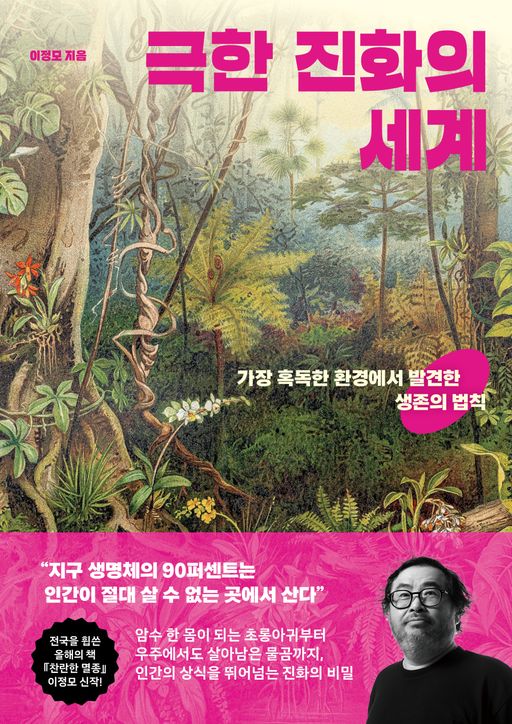
    New경이롭고 치열한 생존 이야기극한 진화의 세계
    AD광고
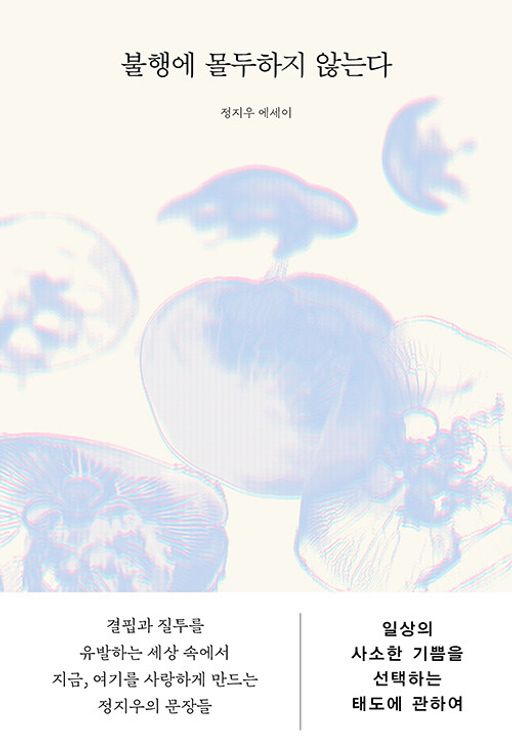
    New행복을 선택하는 삶의 태도불행에 몰두하지 않는다
    • 베스트
    • 소득공제
    • 정가제 FREE
    • 무료배송

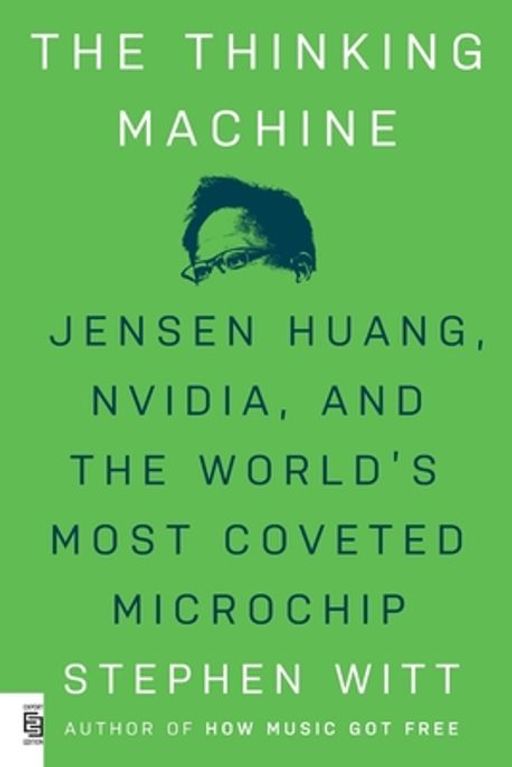
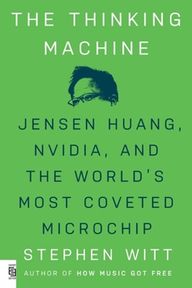
    THINKING MACHINE: JENSEN HUANG NVIDIA AND THE BRAIN OF AI

    • STEPHEN WITT 저
    • VIKING
    • 2025년 01월 14일
    20%25,120원31,400
    적립금
    1,570원 (5% 적립)
    추가 적립
    추가 적립 안내
    • 5만원 이상 결제 시 (*배송비 제외)

      정가제FREE(상품/사은품) 금액이 2,000원 이상이면 2,000원 추가적립

    • 10만원 이상 결제 시 (*배송비 제외)

      정가제FREE(상품/사은품) 금액이 2,000원 이상이면 2,000원 추가적립

      정가제FREE(상품/사은품) 금액이 5,000원 이상이면 5,000원 추가적립

    결제혜택
    무이자 할부
    결제사 혜택
    쿠폰
    회원 가입 즉시 지급되는 적립금 과 등급별 다양한 회원 혜택 보기
    배송비
    무료  (해외배송의 경우 지역에 따라 상이)

    배송안내

    서울특별시 강남구 강남대로 542(논현동, 영풍빌딩)
    지금 택배 주문하면 9/30(수) 출고 가능
    매장 방문해서 직접 구매 가능
    25,120원

    [네이버페이]

    상품 규격 정보
    상품상세정보
    ISBN ISBN-13 : 9780593834565
    쪽수272쪽
    크기기타 규격
    제품구성단행본
    이 책이 속한 분야
    • 외서 일반서적 > LITERARY WORKS
    관련 이벤트
    • 사은품

    외서 금액대별 할인쿠폰

    2026.06.02 ~ 2026.12.31

    • 사은품

    외서 인기 영화/드라마 원작

    2026.05.07 ~ 2026.12.31

    • 사은품

    외서 금액대별 할인쿠폰

    2026.06.02 ~ 2026.12.31

    • 사은품

    외서 인기 영화/드라마 원작

    2026.05.07 ~ 2026.12.31

    • 사은품

    외서 금액대별 할인쿠폰

    2026.06.02 ~ 2026.12.31

    • 사은품

    외서 인기 영화/드라마 원작

    2026.05.07 ~ 2026.12.31

    책 소개

    “A lively biography. . . . The story of how Nvidia became the hottest investment on Wall Street and a household name is fascinating.” —Katie Notopoulos, The New York Times Book Review


    “Framed as a biography of Jensen Huang, the only CEO Nvidia has ever had, the book is also something more interesting and revealing: a window onto the intellectual, cultural, and economic ecosystem that has led to the emergence of superpowerful AI.”

    —James Surowiecki, The Atlantic


    “Stephen Witt’s deep reporting shines through every page of The Thinking Machine. The result is a page-turning biography of perhaps the most consequential CEO and company in the world.” —David Epstein, New York Times bestselling author of Range


    Nvidia is as valuable as Apple and Microsoft. It has shaped the world as we know it. But its story is little known. This is the definitive story of the greatest technology company of our times.


    In June of 2024, thirty-one years after its founding in a Denny’s restaurant, Nvidia became the most valuable corporation on Earth. The Thinking Machine is the astonishing story of how a designer of video game equipment conquered the market for AI hardware, and in the process re-invented the computer.


    Essential to Nvidia’s meteoric success is its visionary CEO Jensen Huang, who more than a decade ago, on the basis of a few promising scientific results, bet his entire company on AI. Through unprecedented access to Huang, his friends, his investors, and his employees, Witt documents for the first time the company’s epic rise and its single-minded and ferocious leader, now one of Silicon Valley’s most influential figures.


    The Thinking Machine is the story of how Nvidia evolved to supplying hundred-million-dollar supercomputers. It is the story of a determined entrepreneur who defied Wall Street to push his radical vision for computing, becoming one of the wealthiest men alive. It is the story of a revolution in computer architecture, and the small group of renegade engineers who made it happen. And it’s the story of our awesome and terrifying AI future, which Huang has billed as the ‘next industrial revolution,’ as a new kind of microchip unlocks hyper-realistic avatars, autonomous robots, self-driving cars, and new movies, art, and books, generated on command.


    This is the story of the company that is inventing the future.

    목차

    [본 문]
      

    Introduction


    This is the story of how a niche vendor of video game hardware became the most valuable company in the world. It is the story of a stubborn entrepreneur who pushed his radical vision for computing for thirty years, in the process becoming one of the wealthiest men alive. It is the story of a revolution in silicon and the small group of renegade engineers who de­fied Wall Street to make it happen. And it is the story of the birth of an awe­some and terrifying new category of artificial intelligence, whose long-term implications for the human species cannot be known.


    At the center of this story is a propulsive, mercurial, brilliant, and extraor­dinarily dedicated man. His name is Jensen Huang, and his thirty-two-year tenure is the longest of any technology CEO in the S& P 500. Huang is a vi­sionary inventor whose familiarity with the inner workings of electronic cir­cuitry approaches a kind of intimacy. He reasons from first principles about what microchips can do today, then gambles with great conviction on what they will do tomorrow. He does not always win, but when he does, he wins big: his early, all‑in bet on AI was one of the best investments in Silicon Val­ley history. Huang’s company, Nvidia, is today worth more than $3 trillion, rivaling both Apple and Microsoft in value.


    In person, Huang is charming, funny, self-deprecating, and frequently self-contradictory. He keeps up a semicomic deadpan patter at all times. We met in 2023 for breakfast at a Denny’s diner, his favorite restaurant chain. Huang had developed the business plan for Nvidia at this same restaurant thirty years earlier; chatting with our waitress, he ordered seven items, in­cluding a Super Bird sandwich and a chicken-fried steak. “You know, I used to be a dishwasher here,” he told her. “But I worked hard! Like, really hard. So I got to be a busboy.”


    Huang, born in Taiwan, immigrated to the United States when he was ten. Denny’s was the crucible of his assimilation—working there as a teen­ager, he ate through the entire menu. Still, he told me, he maintains an outsider’s perspective. “You’re always an immigrant,” he said. “I’m always Chinese.” He cofounded Nvidia (pronounced IN‑vidia, not NUH-vidia) in 1993 when he was thirty, first targeting the nascent market for high-end video game graphics. His products were popular; his customers liked to build their own PCs, sometimes buying transparent housing to showcase their Nvidia hard­ware.


    In the late 1990s, seeking to better render the Quake series of games, Nvidia made a subtle change to the circuit architecture of its processors, al­lowing them to solve more than one problem at a time. This approach, known as “parallel computing,” was a radical gamble. “The success rate of parallel computing was zero percent before we came along,” Huang said, rattling off a list of forgotten start-ups. “Literally zero. Everyone who tried to make it into a business had failed.” Huang ignored this dismal record, pursuing his unconventional vision in open defiance of Wall Street for more than a decade. He looked for customers besides gamers, ones who needed a lot of computing power—weather forecasters, radiologists, deep-water oil prospectors, that sort of thing. During this time, Nvidia’s stock price floun­dered, and he had to fend off corporate raiders to retain his job.


    Huang stuck with this bet, losing money on it for years, until in 2012 a group of dissident academics in Toronto purchased two consumer video game cards to train an exotic kind of artificial intelligence called a neural network. At the time, neural networks, which mimic the structure of biological brains, were deeply out of favor, and most researchers considered them obsolete toys. But when Huang saw how fast neural networks trained on his parallel-computing platform, he staked his entire company on the unexpected symbiosis. Huang now needed two underdog technologies to work—two technologies that had always failed the test of the marketplace in the past.


    When this audacious corporate parlay hit, Nvidia increased in value several hundred times. In the past decade, the company has evolved from selling $200 gaming accessories to shipping multimillion-dollar supercom­puting equipment that can fill the floor of a building. Working with pio­neers like OpenAI, Nvidia has sped up deep-learning applications more than a thousand times in the last ten years. All major artificial-intelligence applications—Midjourney, ChatGPT, Copilot, all of it—were developed on Nvidia machines. It is this unprecedented increase in computing power that has made the modern AI boom possible.


    With a near-monopoly on the hardware, Huang is arguably the most powerful person in AI. Certainly, he’s made more money from it than any­one else. In the strike‑it‑rich tradition, he most closely resembles California’s first millionaire, Samuel Brannan, the celebrated vendor of prospecting supplies who lived in San Francisco in 1849. Except rather than shovels, Huang sells $30,000 AI‑training chips that contain one hundred billion transistors. The wait time to purchase his latest hardware is currently more than a year, and on the Chinese black market, his chips sell for double the price.


    Huang doesn’t think like a businessman. He thinks like an engineer, breaking down difficult concepts into simple principles, then leveraging those principles to great effect. “I do everything I can not to go out of busi­ness,” he said at breakfast. “I do everything I can not to fail.” Huang be­lieves that with AI, the basic architecture of digital computing, little changed since it was introduced by IBM in the early 1960s, is being reconceptualized. “Deep learning is not an algorithm,” he said. “Deep learning is a method. It’s a new way of developing software.”


    This new software has incredible powers. It can speak like a human, write a college essay, solve a tricky math problem, provide an expert medical diagnosis, and cohost a podcast. It scales with the amount of computing power available to it and never seems to plateau. The evening before our breakfast, I’d watched a video in which a robot, running this new kind of software, stared at its hands in seeming recognition, then sorted a collection of col­ored blocks. The video had given me chills; the obsolescence of my species seemed near. Huang, rolling a pancake around a sausage with his fingers, dismissed my concerns. “I know how it works, so there’s nothing there,” he said. “It’s no different than how microwaves work.” I pressed Huang—an autonomous robot surely presents risks that a microwave oven does not. He responded that he has never worried about the technology, not once. “All it’s doing is processing data,” he said. “There are so many other things to worry about.”


    Where this will lead is anyone’s guess; many technologists now worry that AI’s capabilities pose a direct threat to the survival of the human spe­cies. (Among these “doomers” are the Toronto scientists who first imple­mented AI on Huang’s platform.) Huang dismisses such pessimism. For him, AI is a pure force for progress, and he has declared that it is spur­ring a new industrial revolution. He doesn’t permit much disagreement on this topic, and his force of personality can be intimidating. (“Interacting with Jensen is like sticking your finger in the electrical socket,” one of his executives said.) Huang’s employees worship him—I believe they would fol­low him out of the window of a skyscraper if he saw a market opportunity there.


    In May 2023, hundreds of industry leaders endorsed a statement that equated the risk of runaway AI with that of nuclear war. Huang didn’t sign it. Some economists have observed that the Industrial Revolution led to a relative decline in the global population of horses and have wondered if AI might do the same to humans. “Horses have limited career options,” Huang said. “For example, horses can’t type.” As he finished eating, I expressed my concerns that, someday soon, I


    출판사 서평


    Praise for The Thinking Machine


    “A lively biography. . . . The story of how Nvidia became the hottest investment on Wall Street and a household name is fascinating.”

    —Katie Notopoulos, The New York Times Book Review


    “Framed as a biography of Jensen Huang, the only CEO Nvidia has ever had, the book is also something more interesting and revealing: a window onto the intellectual, cultural, and economic ecosystem that has led to the emergence of superpowerful AI. . . . Among Witt’s key contributions is to show that Nvidia’s success can’t be understood apart from the culture and economy of Silicon Valley (and of tech more generally).”

    —James Surowiecki, The Atlantic


    “Mr. Witt is adept at explaining the hardware and software behind AI. Lay readers mystified by parallel processing and large language models will find The Thinking Machine worth reading.”

    —Marc Levinson, The Wall Street Journal


    “Witt's book delves into not just what Nvidians have done but how they think — or don't think — about what their inventions will bring in the grander scheme of history.”

    —Emma Cosgrove, Business Insider


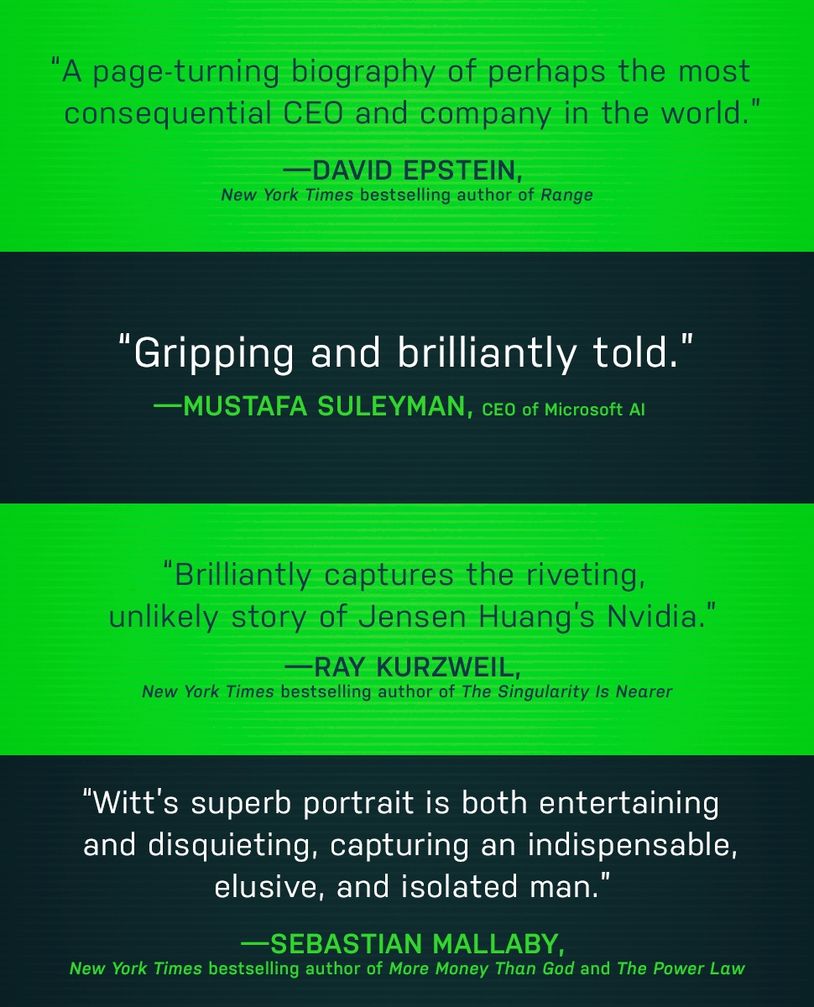
    “Gripping and brilliantly told, this is the amazing story of the improbable origins of one of the most important technologies of our times.”

    —Mustafa Suleyman, New York Times bestselling author of The Coming Wave and CEO of Microsoft AI


    “Stephen Witt’s deep reporting shines through every page of The Thinking Machine. The result is a page-turning biography of perhaps the most consequential CEO and company in the world.”

    —David Epstein, New York Times bestselling author of Range


    “The Thinking Machine brilliantly captures the riveting, unlikely story of Jensen Huang’s Nvidia—a company driving the exponential growth of artificial intelligence and humanity's inevitable merger with technology. Stephen Witt’s exceptional reporting offers a rare glimpse into the pioneers driving humanity’s leap toward an infinite future.”

    —Ray Kurzweil, New York Times bestselling author of The Singularity is Nearer


    “The AI revolution that defines this decade, and probably this century, rests on the shoulders of a shockingly small number of geniuses; and Nvidia’s Jensen Huang is prominent among them. Witt’s superb portrait is both entertaining and disquieting, capturing an indispensable, elusive, and isolated man: the hardware wizard behind the machines that are careering toward something very much like sentience.”

    —Sebastian Mallaby, New York Times bestselling author of More Money Than God and The Power of Law


    “Jensen Huang is smarter than the rest of us. He had the vision to see before anyone else that AI is the transformative technology of our time and the business chops to capitalize. Stephen Witt's up-close account of Nvidia's rise is an essential introduction to the future we are all going to be living in.”

    —Scott Galloway, Professor or Marketing NYU Stern and Co-host of the Pivot and Prof G Markets Podcasts


    “Before reading The Thinking Machine, I didn't understand just how much the rise of Jensen Huang and Nvidia explains the sudden explosion of artificial intelligence. Stephen Witt’s sweeping narrative offers a roadmap to the various forces rapidly changing our lives, tucked into the wild insider story of how one of our strangest and most singular entrepreneurs—in an era chock full of them—not only built a remarkable company but also helped to usher in our brave new world.”

    —Reeves Wiedeman, author of Billion Dollar Loser


    “The Thinking Machine is a delicious account of how a scrawny Taiwanese immigrant, with an intense commitment to reason, loyalty to people, and a Stakhanovite work ethic, built the engine of the AI revolution.”

    —Michael Moritz, former Chairman, Sequoia Capital


    “A fun and well-informed look at its subject matter. There should be more books on one of the world’s most valuable companies, and yes here supply is elastic.”

    —Tyler Cowen, Marginal Revolution


    “This insightful biography from journalist Witt (How Music Got Free) recaps how Taiwanese American electrical engineer Jensen Huang built Nvidia, the microchip company he cofounded, into the central supplier for the AI revolution. . . . Witt offers a perceptive account of how Huang thrived amid the cutthroat competition of Silicon Valley by pursuing offbeat products and niche markets, and his unrivaled access leads to some revealing moments, as when Huang explodes at Witt for suggesting that AI might harm humanity. The result is an entertaining account of a brave new world at its dawning.”

    —Publishers Weekly

    저자 소개
    저자 : STEPHEN WITT
    도서리뷰
    이 책을 읽고 어떤 느낌을 받으셨나요? 리뷰를 남기고 다른 독자들과 함께 공유해보세요.

    구매(배송/수령완료) 후 리뷰를 작성하시면 적립금 300원을 드려요!

    등록된 리뷰가 없습니다

    첫번째 리뷰어가 되어주세요

    교환/반품/환불
    반품/교환방법
    • 마이페이지 > 주문관리 > 주문/배송조회 > 주문조회 후  [1:1상담신청]  또는 고객센터 (1544-9020)
    • ※ 오픈마켓, 해외배송 주문상품 문의 시 [1:1상담신청] 또는 고객센터 (1544-9020)
    반품/교환 가능기간
    • 변심반품의 경우 수령 후 7일 이내
    • 상품의 결함 및 계약내용과 다를 경우 문제점 발견 후 30일 이내
    반품/교환비용
    • 단순변심 혹은 구매착오로 인한 반품/교환은 반송료 고객 부담
    • 해외직배송 도서 구매 후 단순변심에 의한 취소 및 반품 시 도서판매가의 20% 수수료 부과
    반품/교환 불가 사유
    • 소비자의 책임 있는 사유로 상품 등이 손실 또는 훼손된 경우
    • 소비자의 사용, 포장 개봉에 의해 상품 등의 가치가 현저히 감소한 경우
      예) 만화, 잡지, 수험서 및 문제집류
    • 복제가 가능한 상품 등의 포장을 훼손한 경우
      예) 음반/DVD/비디오, 소프트웨어, 만화책, 잡지, 영상 화보집
    • 소비자의 요청에 따라 개별적으로 주문 제작되는 상품의 경우
    • 디지털 컨텐츠인 eBook, 오디오북 등을 1회 이상 다운로드를 받았을 경우
    • 시간의 경과에 의해 재판매가 곤란한 정도로 가치가 현저히 감소한 경우
    • 전자상거래 등에서의 소비자보호에 관한 법률이 정하는 소비자 청약철회 제한 내용에 해당되는 경우
    상품 품절
    • 공급사(출판사) 재고 사정에 의해 품절/지연될 수 있으며, 품절 시 관련 사항에 대해서는 이메일과 문자로 안내드리겠습니다.
    소비자 피해보상
    환불지연에 따른 배상
    • 상품의 불량에 의한 교환, A/S, 환불, 품질보증 및 피해보상 등에 관한 사항은 소비자분쟁 해결 기준 (공정거래위원회 고시)에 준하여 처리됨
    • 대금 환불 및 환불지연에 따른 배상금 지급 조건, 절차 등은 전자상거래 등에서의 소비자 보호에 관한 법률에 따라 처리함
    공지사항
    • [공지사항] 추석 연휴 전국 지점 영업시간 안내
    • [공지사항] [세종이마트점] 2026 추석 연휴 영업시간 안내
    • [공지사항] [인터넷 영풍문고] 2026년 추석 연휴 배송 일정 안내
    • [이벤트 당첨자 발표] 하나은행 나라사랑카드 <전역 PACK 도서 리뷰 작성 이벤트> 당첨자 안내
    • [이벤트 당첨자 발표] 26년 9월 <이달의 작가> 댓글 이벤트 당첨자 안내
    공지더보기